Macaws in Costa Rica
Macaws Near Sámara, Costa Rica – Where to Spot These Colorful Birds
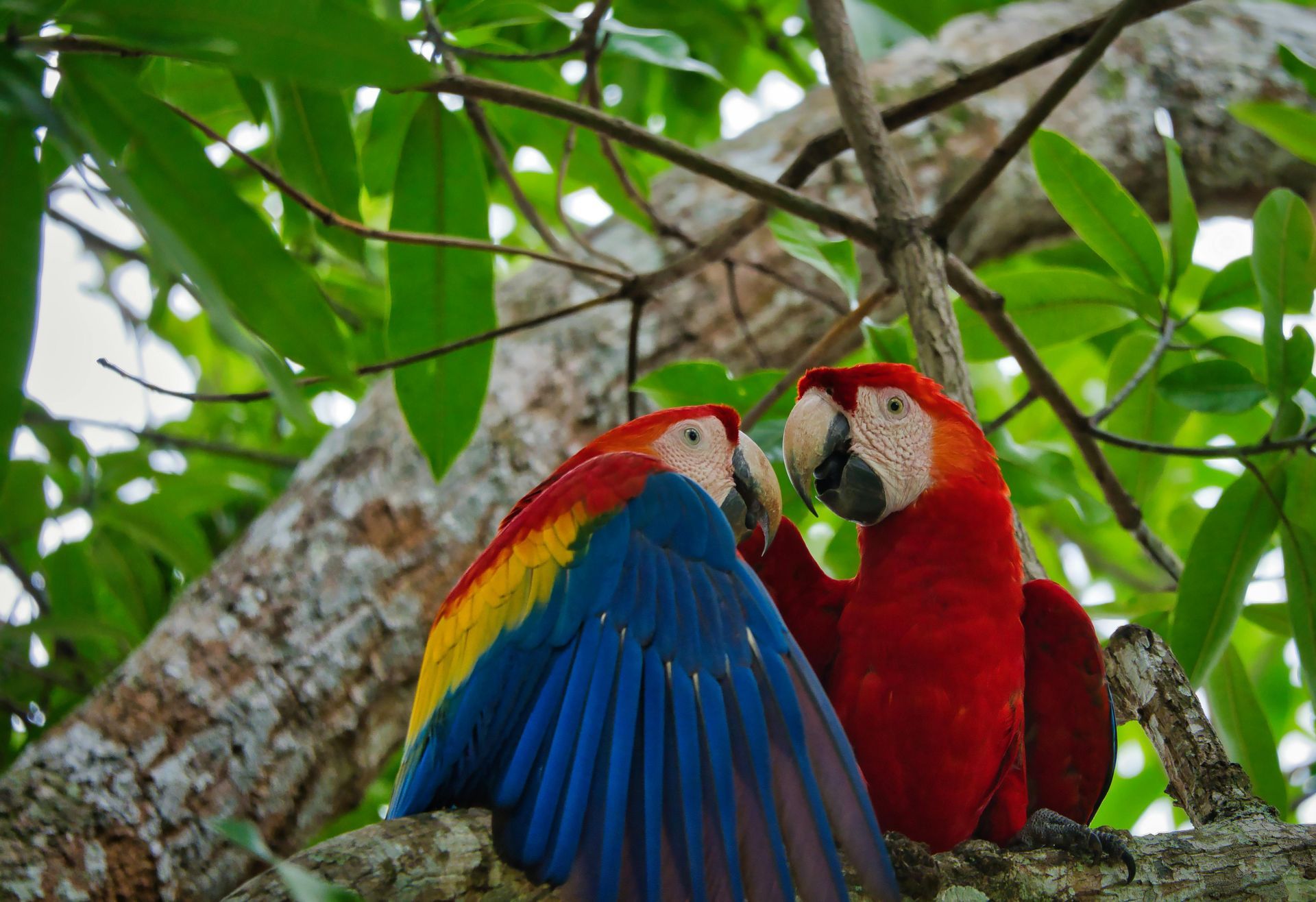
One of the most unforgettable sounds of Costa Rica is often heard before you see its source: the unmistakable call of a Scarlet Macaw flying overhead.
These spectacular red, yellow and blue parrots are among Costa Rica's most iconic birds. And if you are staying at Hotel Dos Aguas in Sámara, you do not necessarily have to travel far to have a chance of seeing them.
Just a few minutes away, around Playa Carrillo, Scarlet Macaws can sometimes be spotted feeding in the trees along the beach.
The secret? Listen first, look second.
Scarlet Macaws Around Playa Carrillo
Playa Carrillo is only a short drive from Sámara and is known for its beautiful palm-lined beach and relaxed atmosphere. It is also a wonderful place to keep an eye – and an ear – out for Scarlet Macaws.
Along the beach and in the surrounding area, you will find tropical almond trees, known locally as almendros. Macaws love their seeds and can sometimes be seen high in the branches feeding, resting or flying between the trees.
Of course, these are wild birds. There is no schedule and no guarantee that they will be waiting for you when you arrive.
That is part of the fun.
Listen Before You Look
If you have never looked for macaws before, there is one very useful trick: use your ears.
Macaws are not exactly quiet birds!
Their loud, distinctive calls can travel a considerable distance, and very often you will hear them before you have any idea where they are.
Once you know approximately where macaws have been spending time, stop for a moment and listen. Their calls can help you work out which direction to look.
Then be patient.
Look toward the tops of the trees and watch the sky between them. Sometimes a pair suddenly flies overhead, their brilliant colors impossible to miss.
At Hotel Dos Aguas, we are always happy to tell our guests where macaws have recently been seen around Carrillo and where it may be worth stopping and listening.
Wildlife moves around, of course, so we can never promise a sighting. But knowing where to start looking certainly helps.
Interesting Facts About Macaws in Costa Rica
Costa Rica is home to two native macaw species: the Scarlet Macaw (Ara macao) and the Great Green Macaw (Ara ambiguus).
The Scarlet Macaw is the species you are most likely to encounter along Costa Rica's Pacific coast. With its brilliant red body and yellow and blue wings, it is difficult to confuse with any other bird.
Macaws mainly eat fruits, nuts and seeds, and their powerful beaks allow them to open foods that many other animals cannot.
They are also highly social. You will often see macaws traveling in pairs, and they are known for forming strong pair bonds.
And if two or more macaws fly overhead, you will probably notice their voices before their colors!
Visit the Macaws at Punta Islita
Seeing Scarlet Macaws around this part of Guanacaste is particularly special because their populations have benefited from years of conservation work.
One important organization in our area is the Macaw Recovery Network – Punta Islita Wild Macaw Reserve, located in Punta Islita, approximately a 45-minute drive from Sámara.
The Macaw Recovery Network works to protect and recover endangered parrot populations and their habitats in Costa Rica. The Punta Islita Wild Macaw Reserve is home to a reintroduced population of free-flying Scarlet Macaws.
Visitors can learn more about the conservation work and have the opportunity to observe these magnificent birds in a natural setting.
If you are interested in wildlife, birds or conservation, a visit to Punta Islita is a wonderful addition to your stay in Sámara. Check the Macaw Recovery Network website for current visitor information and tour options before making the trip.
Playa Carrillo – Worth a Visit Even Without the Macaws
Even if the macaws decide not to appear that day, Playa Carrillo is well worth visiting.
It is just a short drive south of Sámara and is one of the most beautiful beaches in the area, with a long sweep of sand, palm trees and a wonderfully relaxed atmosphere.
Take some time to walk along the beach, look up into the trees – and most importantly, listen.
You never know what might be above you.
Wildlife Is Better Without a Schedule
One of the wonderful things about experiencing wildlife in Costa Rica is that it is not a performance.
The macaws are not always in the same tree. They may arrive, feed for a while and then disappear across the sky. Some days you may find them quickly; on others, you may not see them at all.
That uncertainty makes finally spotting them much more rewarding.
And once you recognize their call, you may find yourself automatically looking toward the sky whenever you hear it again.
Exploring Nature Around Hotel Dos Aguas
Staying at Hotel Dos Aguas puts you in a great position to explore the beaches and wildlife around Sámara and Carrillo.
Our adults-only boutique hotel is surrounded by a peaceful tropical garden in Sámara, while Sámara Beach is only about 450 meters away. Playa Carrillo and many other natural areas of Guanacaste are easy to explore from here.
If you would like to look for Scarlet Macaws during your stay, just ask us. We are happy to tell you where they have recently been spotted and point you in the right direction.
Then all you need is a little patience.
Find a quiet spot, listen carefully – and look up.